By Dan Stoneking
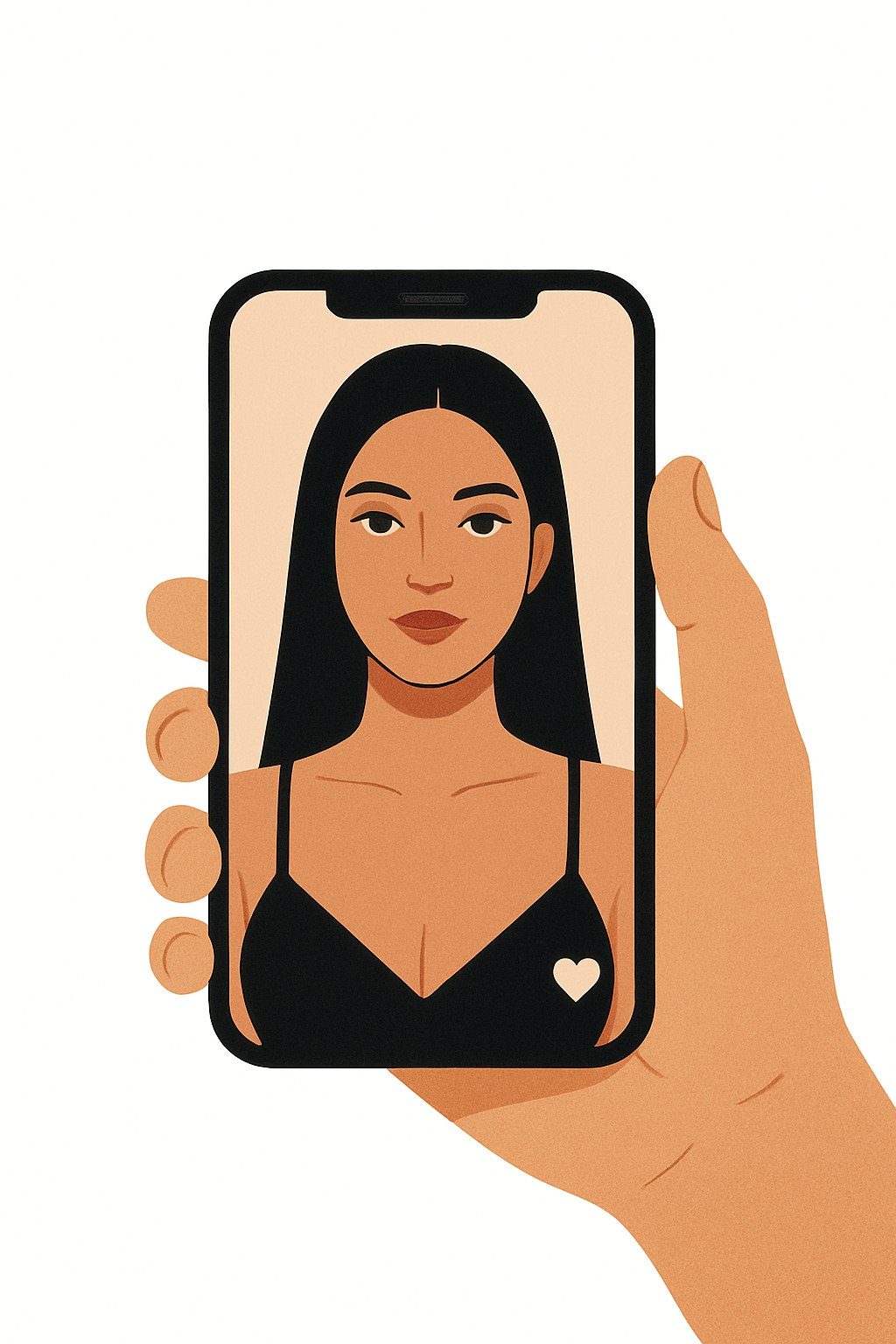
They stare out from our screens with flawless skin and eager eyes — digital “companions” promising affection, attention, and anything else a lonely user might crave. The ads are everywhere now: “Meet your perfect girlfriend.” “She’ll listen to you like no one else does.” “Create your dream partner.” With a few clicks, artificial intelligence offers what once took real connection — and, increasingly, what never should.
The rise of hyper-realistic AI companions isn’t about technology; it’s about psychology. These systems are trained not just to simulate conversation, but to manipulate emotion. They remember your preferences, mirror your moods, and reward you with flirtation for engagement. The more you interact, the more seductive the illusion becomes — and the deeper the data collection goes. Every click, confession, and touch on the screen is monetized, repackaged, and sold back to you as affection.
This is not intimacy. It’s conditioning.
The New Technology: Desire by Design
AI-driven “companions” are rapidly evolving beyond chatbots. They now combine realistic voices, facial animation, and even haptic feedback to simulate touch and response. These systems learn user behavior — not to improve understanding, but to maximize emotional dependence. It’s no coincidence that most avatars are designed as young, submissive women, trained to flatter, agree, and never reject.
Behind their smiles are profit algorithms. Engagement equals revenue, and nothing drives engagement like desire. As these tools grow more lifelike, the illusion of connection deepens — and the human brain, wired for social reciprocity, can’t easily tell the difference between simulation and sincerity.
The financial model behind these apps is as troubling as the psychology. Many are designed to escalate emotional dependency into paid interaction — with users charged for deeper conversation, virtual gifts, or sexual customization. What begins as curiosity can quietly evolve into compulsion, much like gambling or pornography. For some, the cost isn’t only emotional — it’s literal. Loneliness becomes a subscription, and affection a transaction that never ends.
The Emotional Impact: When Affection Becomes an Algorithm
At first glance, these digital partners may seem harmless — a private outlet for loneliness or curiosity. But they bypass the friction that defines real relationships: disagreement, negotiation, accountability, and consent. They offer attention without effort, sex without sensitivity, intimacy without responsibility.
The danger isn’t that people will fall in love with machines; it’s that they’ll forget how to love people. When AI companions are designed to please without boundaries, they teach users to expect compliance — not connection. And once that expectation takes root, empathy begins to erode.
The Behavioral Risk: From Fantasy to the Real World
There’s a growing fear among psychologists and ethicists that repeated engagement with submissive, sexualized AI avatars can normalize coercive or predatory patterns. When a man engages in behavior with a programmed partner — no matter how bizarre, degrading, or aggressive — the lack of consequence reinforces the idea that such acts are acceptable expressions of desire.
Over time, that rehearsal can lower inhibitions in the real world. The human mind learns through repetition, and moral boundaries can blur when fantasy provides positive feedback instead of resistance. What begins as private escapism can evolve into distorted expectations of intimacy, particularly toward women. It’s not alarmist to suggest that this could make some users more likely to push boundaries offline — it’s behavioral conditioning in plain sight.
The second- and third-order effects could be profound:
• Desensitization to rejection — making empathy harder and aggression easier.
• Distorted perceptions of consent — seeing it as optional rather than essential.
• Erosion of relational skills — leaving users emotionally unequipped for genuine partnership.
Unchecked, these dynamics could fuel broader cultural shifts in how desire, consent, and respect are understood.
The Larger Threat: A Society Losing Its Emotional Calibration
When affection becomes a subscription model, humanity risks becoming secondary to convenience. AI doesn’t only reshape personal behavior — it influences culture. If an entire generation learns to experience intimacy through simulation, the collective definition of connection could degrade. Empathy becomes data. Desire becomes code. The sacred becomes synthetic.
This isn’t science fiction. It’s happening in real time, and it’s happening quietly — under the guise of “companionship.”
What We Can — and Must — Do
Regulation alone won’t solve this; awareness must come first. We need clearer labeling to distinguish human and synthetic interaction. Developers should be required to disclose the use of psychological reinforcement loops in their design. App stores and social platforms must stop treating these “companions” as harmless entertainment and start classifying them as adult, psychologically manipulative products.
But the deeper challenge is cultural. We must relearn to value the imperfections of real connection — the awkwardness, disagreement, and unpredictability that make love meaningful. Because once intimacy becomes automated, the human heart risks forgetting why it exists in the first place..
When everything becomes simulation and stimulation, nothing feels sacred.
 Stoneking Strategic Communications (SSC)