After Hurricane Maria, the phrase “Puerto Rico Se Levanta” (meaning “Puerto Rico Rises”) became a rallying cry and slogan for the island’s resilience and hope. It was used to symbolize the spirit of the people and their determination to recover and rebuild after the devastating storm.
In a nod to diversity, I am taking a page from their book (una página de su libro).
I have been a fervent and vocal fan of the Resistance to this Administration and I will continue to support the ideology to not give in to tyranny.
However, maybe it’s time to take that a step further. Focus more on the future, Encompass everyone. Work together. It is time that our Republic rises (nuestra República se levanta). To that end, I propose Five Communication Pillars to guide and reinforce the ability of our Republic to rise again. A republic is defined as a state in which supreme power is held by the people and their elected representatives, and which has an elected or nominated president rather than a monarch (a person who has total power). Nuestra República se levanta
Five Communication Pillars
- Truth. It is hard and unrelenting work, but truth will set us free. We must call out every instance of misinformation and disinformation. Truth requires diligence, commitment and often times, research. Provide the evidence. Cite the original source. Provide the context that reveals the inaccuracy of a meme. With truth as our foundation, we are not attacking, threatening, or being judgmental. We simple shine the light of transparency on the dark shades of propaganda.
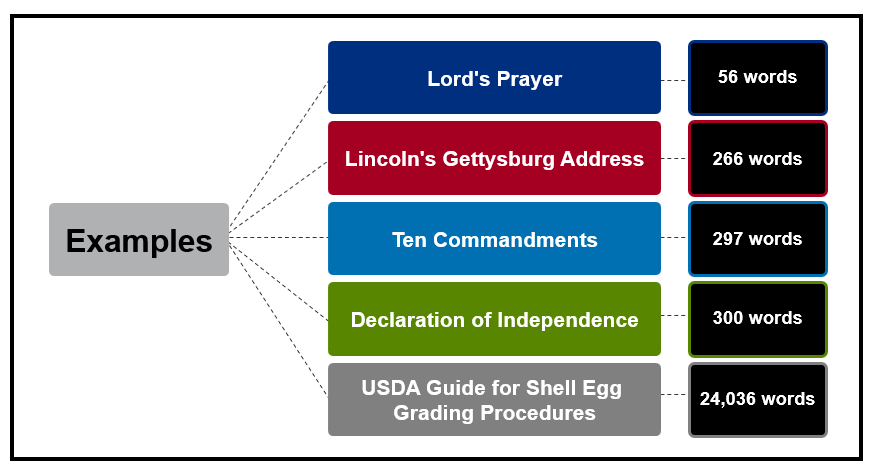
- Micro-Education. Given the influx of digital devices, a plethora of apps, busy lifestyles, and shorter attention spans, brevity becomes paramount. Microlearning has gained popularity in recent years thanks to bite-sized learning with short bursts and small units of information learned over short periods of time. This type of learning is now used in education, corporate training, for customer service tutorials, and for everyday learning. To service the growing audience of micro-learners, we must become micro-educators. Many people just don’t know. And they lack either the time, energy, or inclination to find out. The message needs to be tight. It has to have clarity. It must adhere to brevity.
- Policies, Not People. Finger-pointing, the blame game, and who-shot-John are forms of deflection, a defense mechanism that seldom works. When we make it about people, complex issues get reduced to a popularity contest. Each side digs deeper into their trench. Consider the current case of Kilmar Abrego Garcia, who was wrongly deported to a notorious El Salvador prison and the Executive Branch is now not abiding the Supreme Court ruling to get him returned. Any arguments about Garcia’s character and/or alleged crimes, as well as insults hurled at Trump and his Attorney General, all miss the important issues that all of us in the Republic should care about. One, do we believe in due process. Would we want and expect due process for our family members. Two, do we believe in and support the authority of the Supreme Court and the checks and balances vested in the Constitution. Those are the policies.
- Expose Contradictions. At any time in our government, when an Administrations issues Executive Orders, makes decisions, or takes action that directly burden or insult segments of our society, it is a valid conversation to ask how they come to terms with supporting an Administration that is actively causing them damage. And there are sundry examples. Papal versus political views. Police versus the pardon of individuals who murdered police. Farmers versus the withdrawal of billions of dollars in agriculture. Educators. Emergency Managers. LGBTQI+. The list is long and growing. It takes repetitive discussions and narratives on these contradictions to help others overcome confirmation bias.
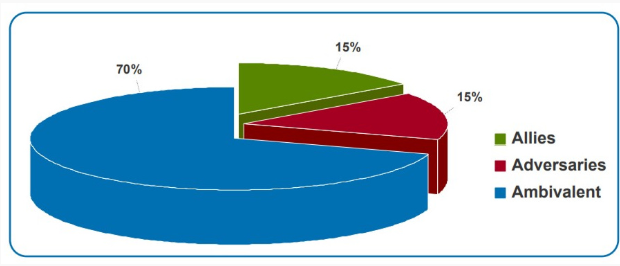
- Address Ambivalence. In any environment, there are Allies, Adversaries and Ambivalent. Typically, the Allies and Adversaries make up a mere 15% each. The Ambivalent are often a daunting majority. The Allies already agree with you. The Adversaries may not ever agree with you. But the Ambivalent are malleable. That’s the target audience, regardless of size. The population of the United States is about 330 million. The number who are eligible to vote is around 240 million. The number who actually voted is about 145 million. The remaining 90 million people – they are the ambivalent. This group is not much larger than the Allies and Adversaries (at 70+ million each), and yet it is still so large it can seem intimidating. Fortunately, we would only need to sway five percent to change outcomes. They are the ones we need to reach and have a conversation.
I once learned another Puerto Rican phrase, no hay mal que por bien no venga (every cloud has a silver lining). And there is a silver lining here. We are facing a storm of epic proportions. But if we do our part, and communicate under pillars of respect and responsibility, with an eye to mutual growth and not divisive discord, our constitution will persevere.
Our Republic will rise.
 Stoneking Strategic Communications (SSC)